Introduction
E-commerce architecture decisions have long-term implications for your business agility, costs, and customer experience. Choose the wrong approach, and you'll face expensive migrations down the road. Choose wisely, and your platform becomes a competitive advantage that scales with your growth.
This guide examines three primary approaches—traditional platforms like Shopify, fully custom solutions, and hybrid headless architectures—helping you make informed decisions based on your specific requirements, resources, and growth trajectory.
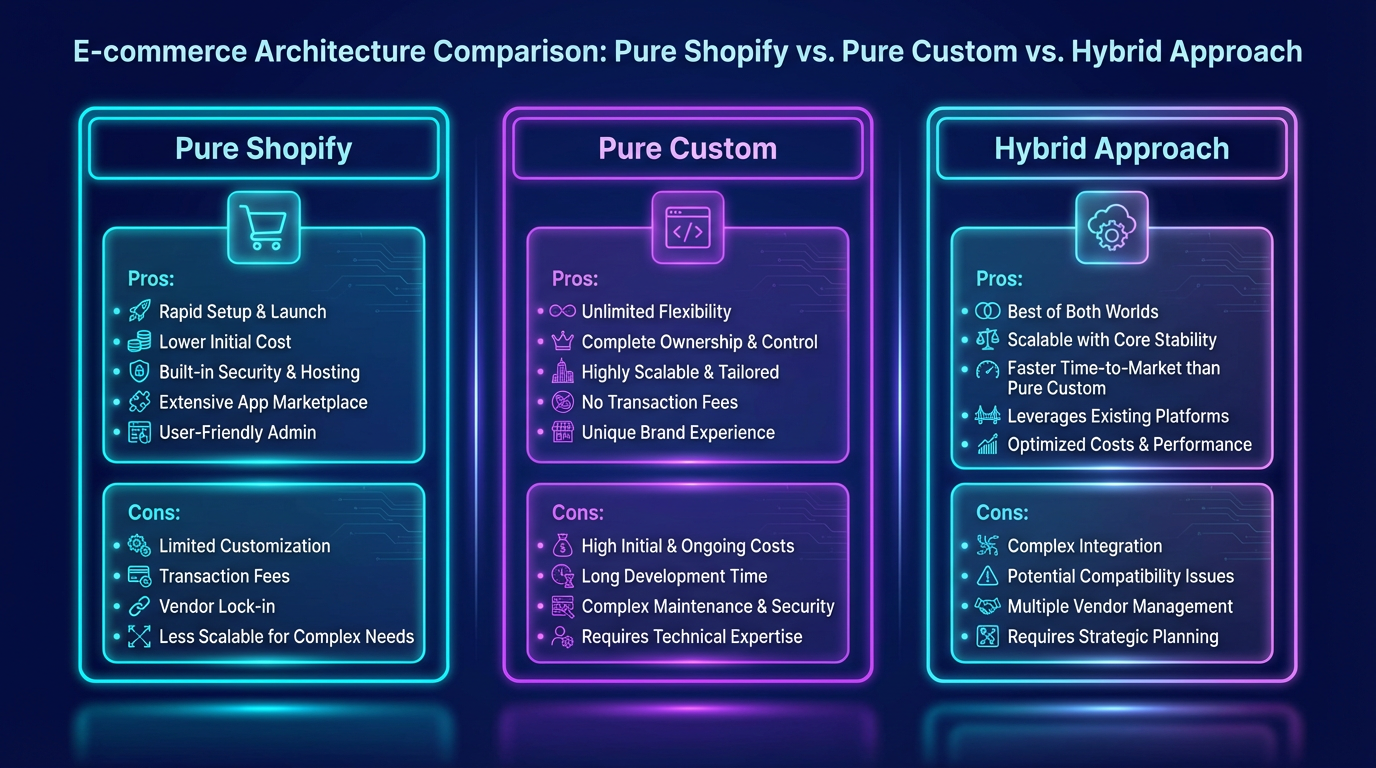
E-Commerce Architecture Comparison
Each architecture approach offers distinct advantages and trade-offs across key dimensions:
Approach 1: Platform-Based (Shopify, BigCommerce)
All-in-one e-commerce platforms that handle everything from product catalog to checkout, payments, and order management.
✅ Advantages
- Fast Launch: Go live in days or weeks
- Built-in Features: Payments, shipping, tax calculations included
- Managed Infrastructure: Hosting, security, updates handled
- App Ecosystem: Thousands of plugins for extended functionality
- Lower Initial Cost: $29-299/month subscription model
- Proven Reliability: Handles traffic spikes automatically
❌ Limitations
- Design Constraints: Limited by theme capabilities
- Customization Limits: Complex features may not be possible
- Transaction Fees: 2-3% unless using platform's payment processor
- Platform Lock-in: Migration to another system is difficult
- Limited Control: Can't optimize every aspect of performance
- Scaling Costs: Higher-tier plans as you grow
Best For: Small-to-medium businesses, startups testing product-market fit, traditional retail models, teams without extensive technical resources
Approach 2: Fully Custom Build
Building e-commerce functionality from scratch using modern web frameworks (Next.js, React) with custom backend services.
✅ Advantages
- Complete Control: Build exactly what you need
- Unique UX: Differentiate through custom experiences
- No Platform Fees: Avoid monthly subscriptions and transaction fees
- Custom Logic: Complex business rules and workflows
- Data Ownership: Full control over customer and transaction data
- Integration Freedom: Connect to any system without limitations
❌ Challenges
- High Initial Investment: 6-12 months development time
- Ongoing Maintenance: Security updates, bug fixes, feature development
- Complex Features: Shipping, tax, payment integrations require significant effort
- Technical Expertise: Need experienced development team
- Compliance Burden: PCI-DSS, GDPR, accessibility standards
- Scalability Responsibility: Must architect for growth
Best For: Enterprises with unique requirements, businesses with complex product configurations, companies with in-house technical teams, those selling digital products/services
Approach 3: Hybrid (Headless/Composable)
Custom frontend (storefront) powered by platform backend (Shopify, Commerce tools) via APIs—best of both worlds.
✅ Advantages
- Design Freedom: Build any frontend experience you imagine
- Proven Backend: Leverage platform's commerce engine
- Faster Time-to-Market: Than fully custom (2-4 months)
- Easy Content Management: Use platform's admin for products
- Multi-Channel: Power website, mobile app, POS from one backend
- Performance Optimization: Custom frontend can be highly optimized
❌ Considerations
- Checkout Experience: May redirect to platform for checkout
- Two Systems: Frontend + platform to maintain
- Technical Complexity: Requires frontend and API expertise
- Platform Costs: Still pay monthly platform fees
- API Limitations: Constrained by platform's API capabilities
- Development Skills: Need modern JavaScript/framework expertise
Best For: Brands prioritizing unique experiences, businesses needing content-rich storefronts, companies selling across multiple channels, teams with frontend development skills
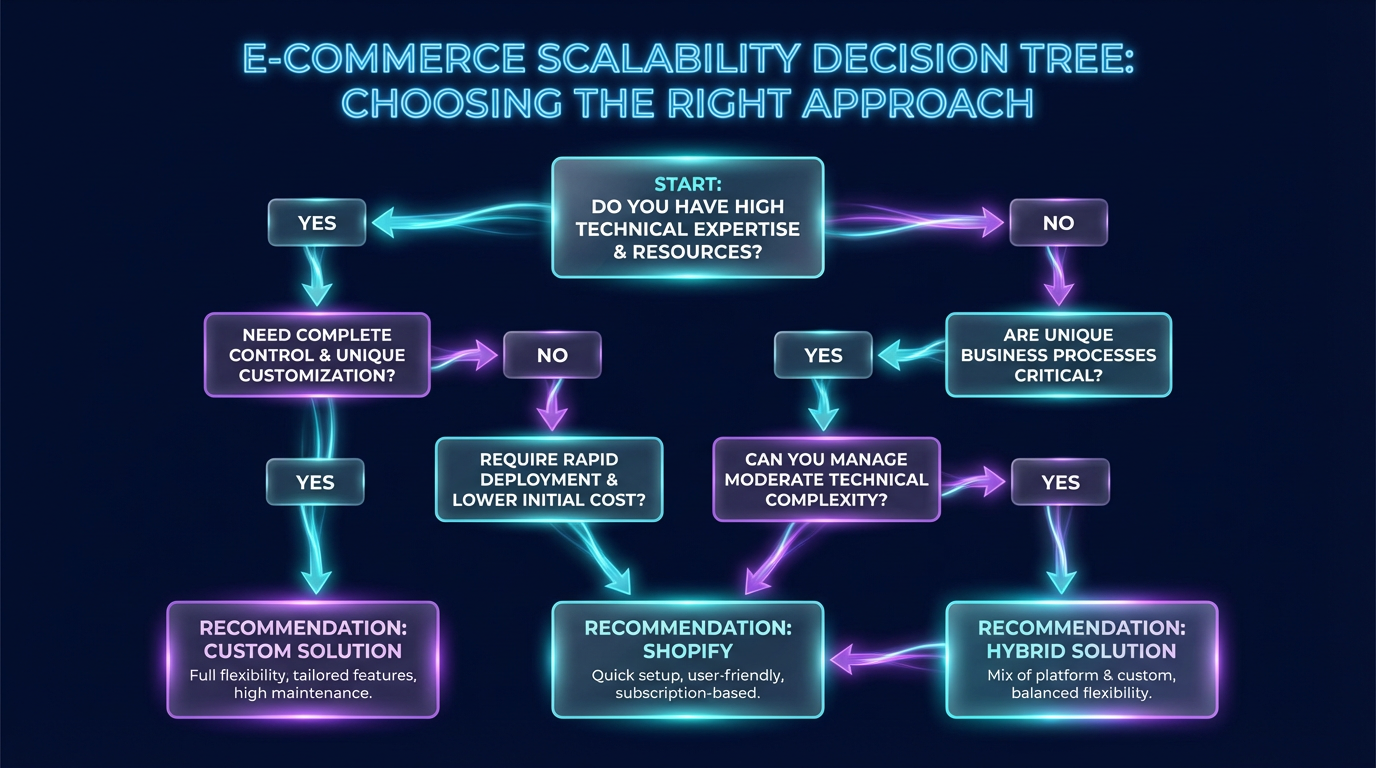
Choosing Your Architecture
Use this decision tree to identify the approach best suited to your situation:
Key Questions to Ask
- • What's your launch timeline?
- • What's your technical team size/skill?
- • How unique are your requirements?
- • What's your budget (initial + ongoing)?
- • How fast will you scale?
- • Do you need multi-channel selling?
Start with Platform If...
- ✓ Need to launch in under 3 months
- ✓ Limited technical resources
- ✓ Budget under $50k for setup
- ✓ Standard product catalog
- ✓ Proven business model
Consider Custom If...
- ✓ Unique product configuration needs
- ✓ Complex pricing/discount logic
- ✓ Heavy integration requirements
- ✓ Strong technical team in-house
- ✓ Long-term differentiation strategy
Essential E-Commerce Features
Regardless of architecture choice, ensure your platform handles these core capabilities:
Product Management
- Variants (size, color, etc.)
- Inventory tracking
- Product bundles
- Digital product delivery
- Pre-orders and backorders
Shopping Experience
- Product search and filtering
- Wishlist/favorites
- Product recommendations
- Customer reviews
- Recently viewed items
Checkout & Payments
- Guest and account checkout
- Multiple payment methods
- Address validation
- Discount codes and promotions
- Cart recovery (abandoned cart emails)
Order Management
- Order tracking and status
- Shipping label generation
- Returns and refunds
- Order history
- Email notifications
Customer Accounts
- Registration and login
- Order history access
- Saved addresses
- Saved payment methods
- Subscription management
Analytics & Reporting
- Sales and revenue tracking
- Conversion funnel analysis
- Product performance
- Customer lifetime value
- Inventory reports
Performance Optimization Strategies
E-commerce conversion rates are directly tied to page load speed. Every 100ms delay costs 1% in sales.
Critical Optimization Areas
Image Optimization
- Use WebP or AVIF formats (90% smaller than JPEG)
- Implement lazy loading for below-the-fold images
- Serve responsive images with srcset
- Use CDN for image delivery
- Compress images without visible quality loss
Code Optimization
- Minimize JavaScript bundle size (code splitting)
- Defer non-critical JavaScript
- Inline critical CSS
- Remove unused CSS/JS
- Use modern build tools (Vite, Next.js)
Caching Strategy
- Implement CDN for static assets
- Cache product data (5-60 minutes TTL)
- Use Redis/Memcached for session data
- Browser caching with proper headers
- API response caching where appropriate
Database Performance
- Index frequently queried fields
- Optimize complex queries
- Use read replicas for scaling
- Implement connection pooling
- Monitor slow queries and optimize
Target for product pages
95th percentile target
Maximum downtime: 8.7h/year
Security & Compliance
E-commerce sites handle sensitive customer and payment data, making security paramount:
PCI-DSS Compliance
Payment Card Industry Data Security Standard requirements:
- Never store full credit card numbers
- Use tokenization for payment data
- Implement SSL/TLS encryption
- Regular security audits
- Use PCI-compliant payment providers
GDPR & Privacy
European Union data protection requirements:
- Clear consent for data collection
- Right to access personal data
- Right to be forgotten (data deletion)
- Data breach notification (72 hours)
- Privacy policy and cookie notices
Application Security
- Input validation and sanitization
- Protection against SQL injection
- XSS (cross-site scripting) prevention
- CSRF token implementation
- Rate limiting on APIs
- Regular dependency updates
Infrastructure Security
- Web Application Firewall (WAF)
- DDoS protection
- Regular security patches
- Encrypted data at rest and in transit
- Access control and authentication
- Security monitoring and alerting
Conclusion
There's no universally "best" e-commerce architecture—only the right fit for your specific situation. Platform solutions like Shopify offer speed and simplicity, custom builds provide maximum flexibility, and hybrid approaches balance both.
Start by honestly assessing your requirements, timeline, budget, and team capabilities. When in doubt, start simpler and migrate to more complex solutions as your needs and resources grow. Many successful e-commerce businesses began on Shopify and later moved to custom or hybrid approaches once they reached scale.
Whatever you choose, prioritize performance, security, and customer experience. These fundamentals matter more than the underlying technology stack.
Maltha & Lane specializes in e-commerce architecture consulting and implementation across all approaches. We help businesses choose the right path and execute flawlessly from strategy through launch.